


HOME / ENGINEERING/ POLYURETHANE SERVICES / POLYURETHANE RETYRE
Polyurethane Re-Tyring & Relagging Services
Extend the service life of worn industrial wheels with Richmond’s polyurethane re-tyring and relagging services. By retaining your original hub and fitting a new polyurethane tyre, we help reduce downtime, cut costs, and keep your equipment rolling reliably longer.
Restore Performance to Your Wheels With Polyurethane Re-tyring
Our polyurethane re-tyring services extend wheel life by recoating existing hubs with a new, precision-machined polyurethane tyre. Produced in-house in Australia, we can cover both standard and custom sizes, engineered to suit your required hardness and application.
With years of experience and extensive expertise in polyurethane solutions, we provide high-quality re-tyring and relagging services for industrial wheels and rollers. Our engineered polyurethane formulations enhance durability, wear resistance, and load-bearing capacity, ensuring optimal performance in demanding applications.
Polyurethane Retyre Services
Extend the life of your wheel with a new polyurethane tyre. If your hub is still in good shape, we can recoat it with a new polyurethane tyre. Our team will confirm your measurements and application needs, then clean the hub, recast the tyre, and machine it to suit. Custom sizes and shapes can be accommodated.
- A cost-effective alternative to replacing a complete wheel using your existing hub.
- In-house Australian polyurethane tyre production.
- Polyurethane experts – our experienced team have been providing specialised polyurethane solutions to Australian business for decades.
- Standard and custom sizes
- Tailored to suit your required hardness and application requirements.
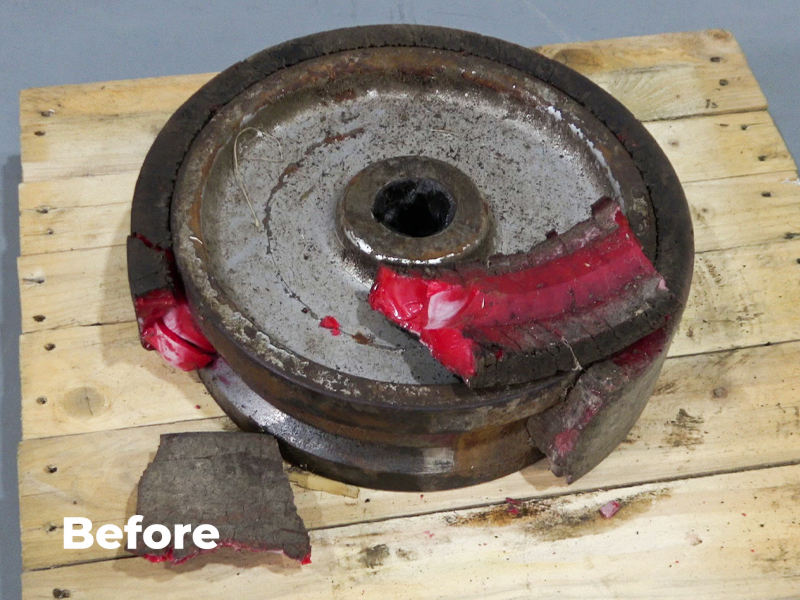
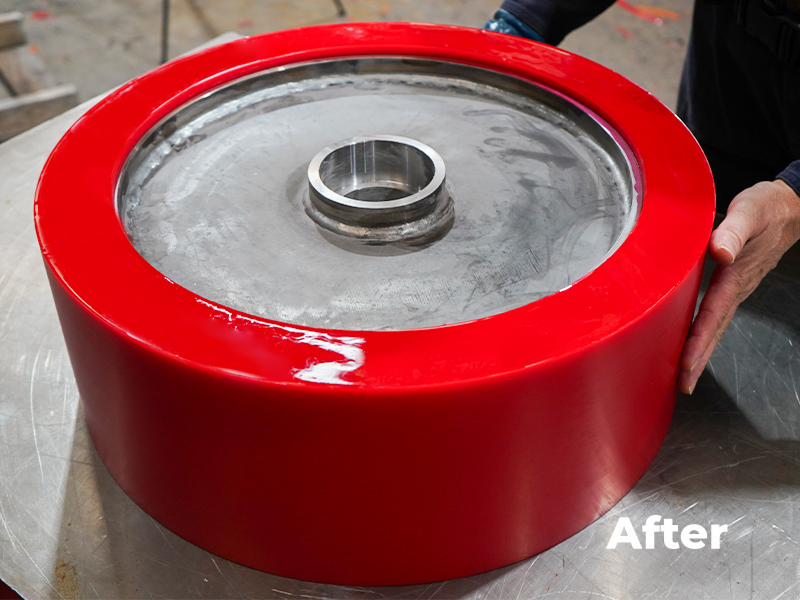
Benefits of re-using and re-coating your existing wheel hub:
Extended Service Life
High-performance polyurethane reduces wear and tear, extending the lifespan of wheels and rollers.
Superior Durability
Excellent resistance to abrasion, impact, and chemicals, making it ideal for harsh industrial environments.
Tailored To Your Specifications
We work with you to determine the tyre hardness and other application specific factors that your wheel needs to meet.
Cost-Effective Solution
Minimise replacement costs by providing a cost-effective alternative to replacing a complete wheel using your existing hub.
Polyurethane Experts
Our experienced team have been providing specialised polyurethane solutions to Australian business for decades. In-house polyurethane tyre production.
7. Oven Curing
Depending on the polyurethane grade and the size of the component, heat is used to accelerate the cross-linking of the polymer chains and complete the polymerisation process.
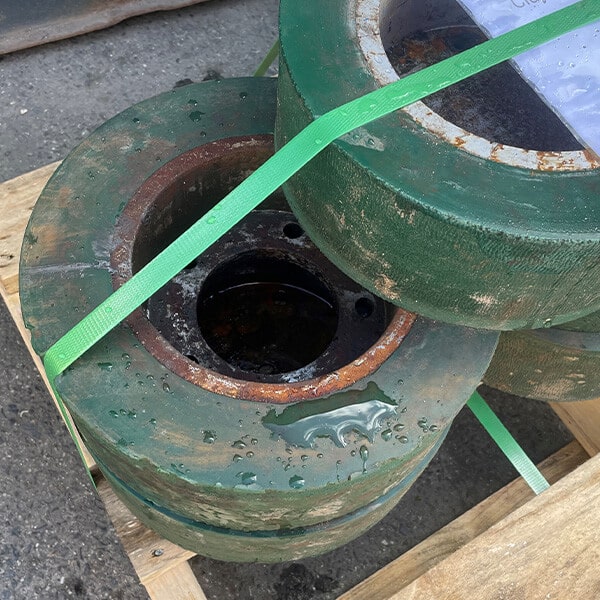
Forklift Wheel Repair & Polyurethane Re-Tyring
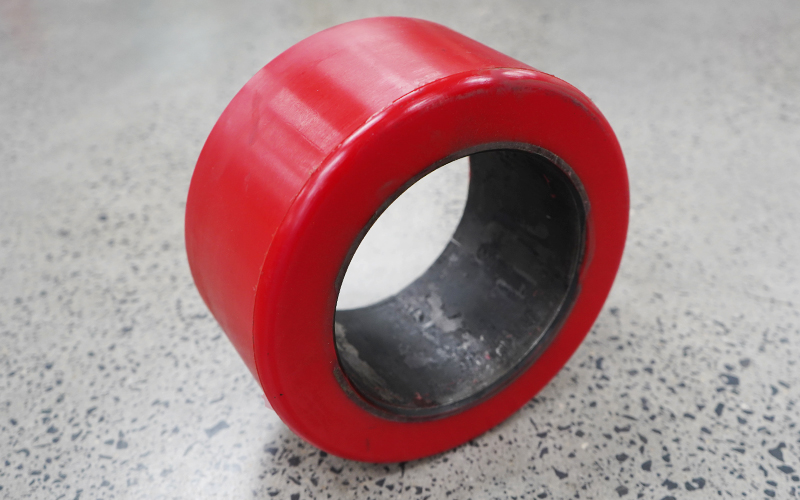
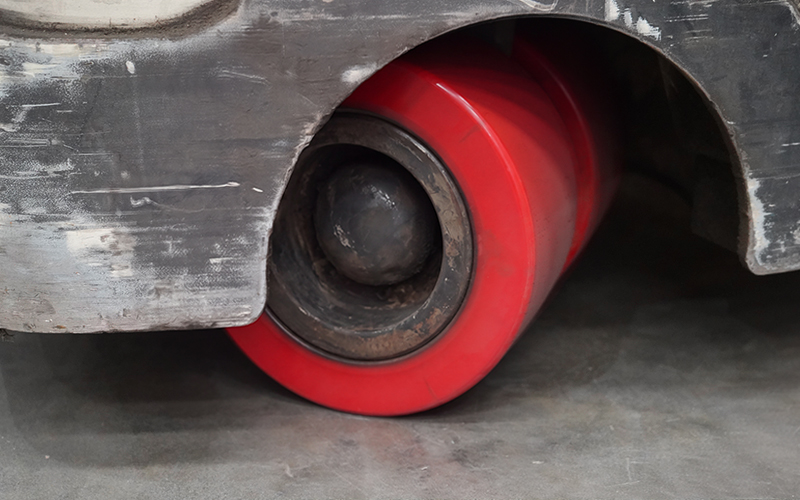
Worn polyurethane forklift wheels can often be re-tyred rather than replaced as a complete wheel. If the existing hub or wheel core is still in good condition, the worn polyurethane can be removed and replaced with a new polyurethane tyre, extending the life of the existing wheel.
Using our in-house polyurethane moulding capabilities, we can recast and bond a new tyre to your existing forklift wheel core. The wheel is then machined to suit the required dimensions and profile, with standard and custom sizes able to be accommodated.
Polyurethane can be tailored to the required hardness and application, helping achieve the right balance of load capacity, durability and wear resistance. With polyurethane manufactured in-house in Australia, we can produce forklift wheel tyres to suit specific equipment and operating requirements.
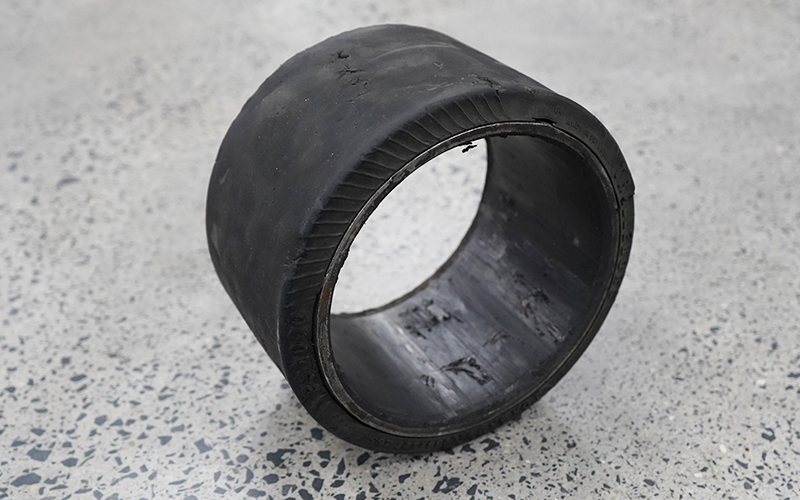
Our Polyurethane Re-Tyring Process
1. Wheel Inspection
We inspect the existing wheel, measure the polyurethane hardness and assess the condition of the hub or core to confirm whether it is suitable for re-tyring.
2. Confirm Application Requirements
Wheel dimensions, polyurethane hardness, application requirements and any other specifications are confirmed before production begins.
3. Surface Preparation
The worn polyurethane is removed before the existing hub or core is cleaned and sandblasted, preparing the surface for bonding the new polyurethane tyre.
4. Polyurethane Moulding
New polyurethane is cast and bonded to the prepared wheel core using the required polyurethane grade and mould.
5. Precision Machining
The re-tyred wheel is machined to the required dimensions and profile, providing an accurate size and smooth finished surface.
6. Bearings (if Required)
New or specialty bearings can also be supplied and fitted where required.
7. Ready for Delivery
The finished wheel is prepared for delivery, ready to be returned to service.
8. Back in Operation
The newly re-tyred wheel is returned to operation, ready to deliver reliable performance and an extended service life.
Important Considerations for Re-Tyring
To ensure the best performance and longevity, we recommend providing the following details:
- Load Capacity: Maximum weight the wheel is required to support.
- Application: Specific use case (e.g., conveyors, forklifts, heavy machinery).
- Existing Hardness: If known, provide the current polyurethane durometer (common hardnesses include 50A, 60A, 70A, 80A, 85A, 95A, 65D, and 75D). We can measure this if required.
- Wheel Dimensions: Diameter, width, and boss diameter for accurate machining.
- Chemical Exposure: Presence of oils, solvents, or other chemicals that may affect material performance.
- Environmental Factors: Dust, moisture, impact loads, or abrasive conditions that the wheel will encounter.
- Temperature Range: Operating temperatures to ensure the polyurethane compound is suitable for the environment.
FAQ
What polyurethane hardnesses are available for re-tyring?
Our standard polyurethane hardness range includes 50A, 60A, 77A, 85A, 90A, 95A, 57D, 65D and 75D. For specific applications, we can also manufacture polyurethane in hardnesses ranging from 25A to 85D.
Can you match the size of my existing wheel?
Yes. We can manufacture the new polyurethane tyre to match the required wheel diameter, width and profile. Standard and custom sizes can be accommodated, with the new tyre machined to the required profile and dimensions.
What if I don’t know the hardness of my existing polyurethane tyre?
If you don’t know the existing hardness don’t worry, our team can measure the polyurethane on your wheel and help determine a suitable replacement.
We can also take the wheel’s load, application and operating conditions into account when selecting the polyurethane hardness.
What happens if my existing wheel core can’t be re-used?
If the existing hub or wheel core is damaged or unsuitable for re-tyring, we can manufacture a new wheel through our in-house engineering and polyurethane manufacturing capabilities to suit the required application.
Ready to Get Started?
Still have questions or need expert advice?
Give us a call on 1300 474 246 or submit an enquiry using the below form. Our team is here to help you find the right solution!