


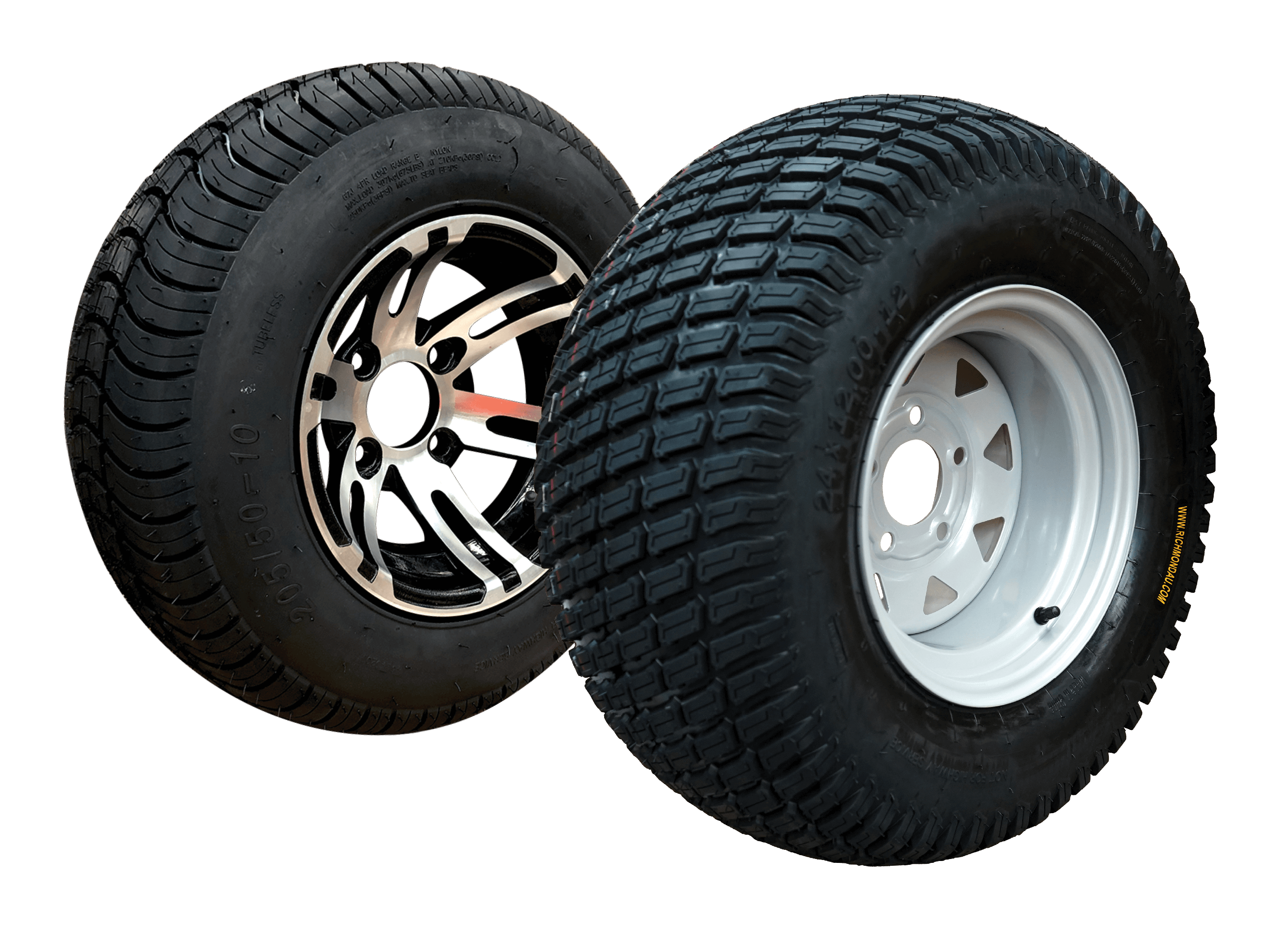
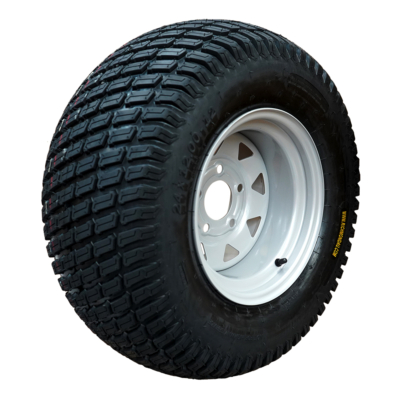
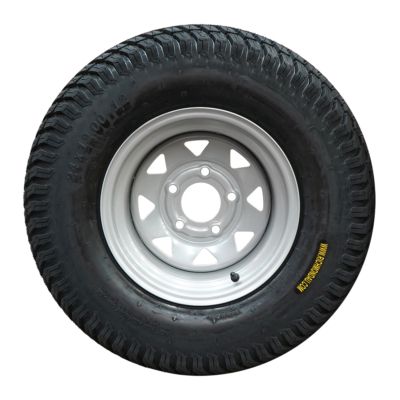
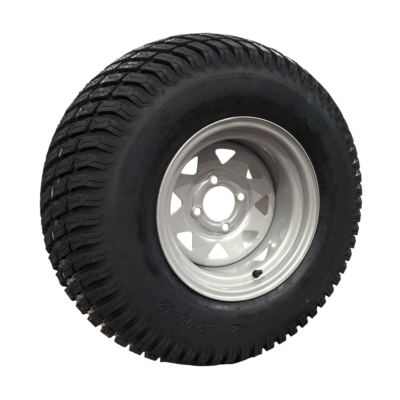
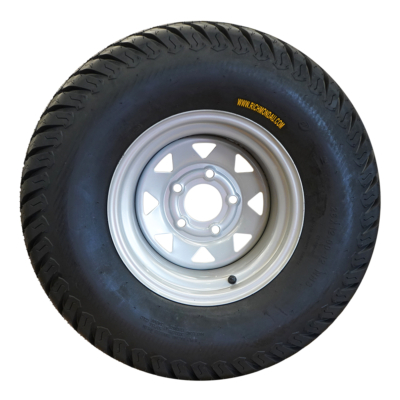
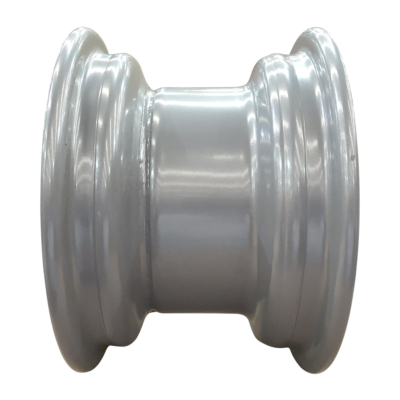
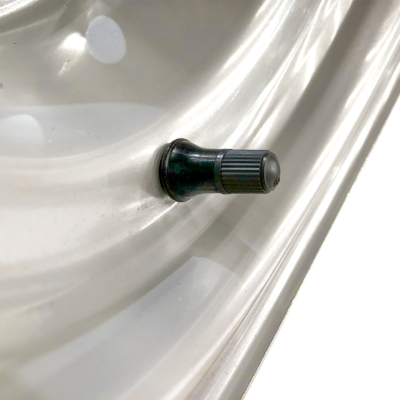
Richmond’s premium turf and mower wheel range includes complete pneumatic wheel assemblies to suit a range of used on ride-on mower front and rear wheels, utility trailers, greenskeeping equipment, and more. Our range of premium turf wheels includes tyres and stud/PCD patterns to suit common equipment across Australia - with a range of matching replacement tyres, tubes, and steel rims available




Frequently Asked Questions
What are premium turf wheels used for?
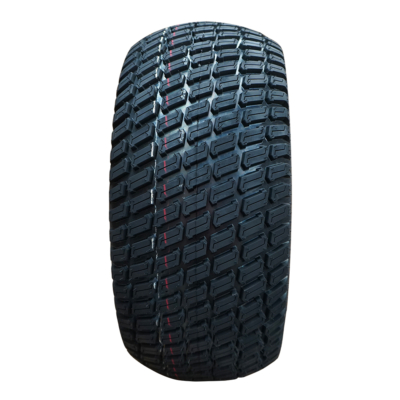
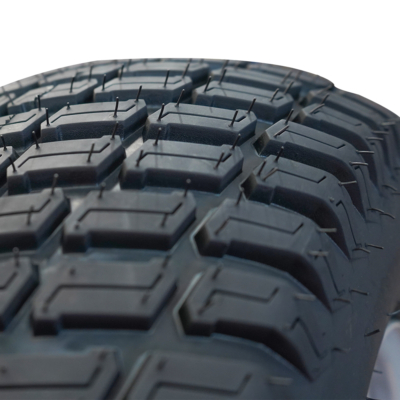
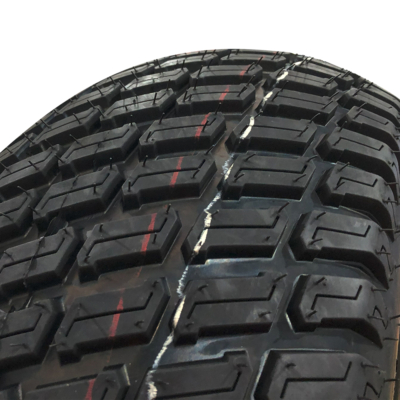
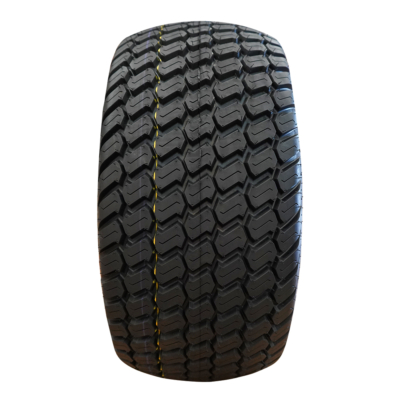
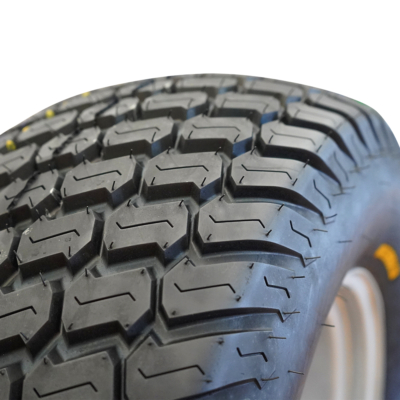
Premium turf wheels are designed for ride-on mowers, golf carts, utility trailers, greenskeeping equipment and other outdoor machinery that operates on grass or landscaped surfaces. Their specialised tread pattern provides excellent traction while helping to minimise damage to lawns, sports fields and golf courses.
How do I choose the right replacement turf wheel?
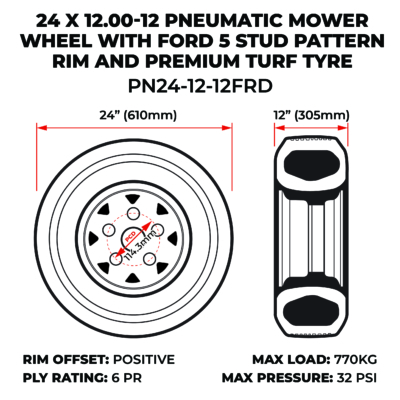
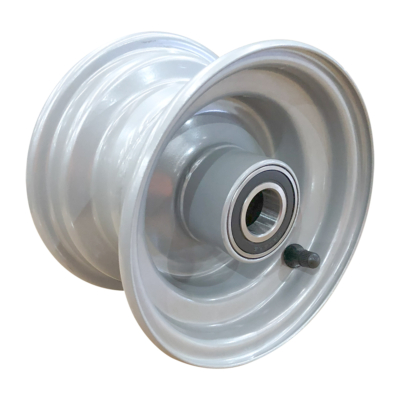
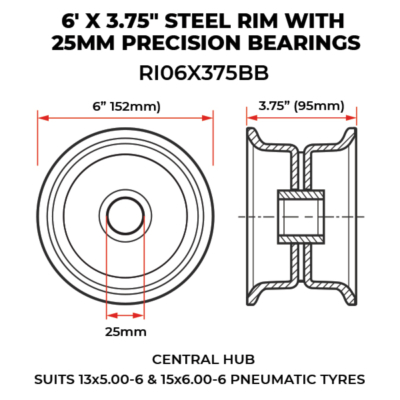
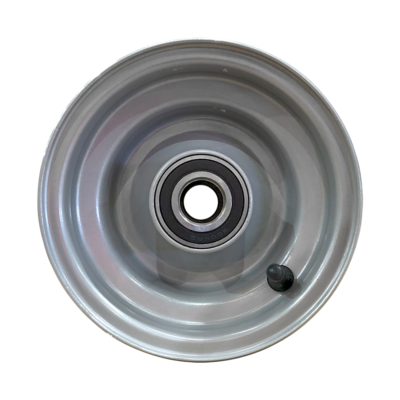
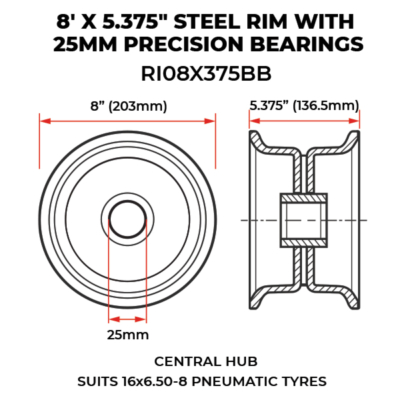
When selecting a replacement turf wheel, check the tyre size, rim diameter, mounting method, stud pattern or bearing size, rim offset and load capacity. Matching these specifications to your existing wheel ensures correct fitment and maintains the handling, stability and performance of your equipment.
What is rim offset and why is it important?
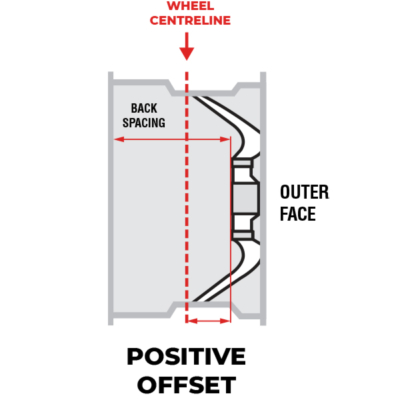
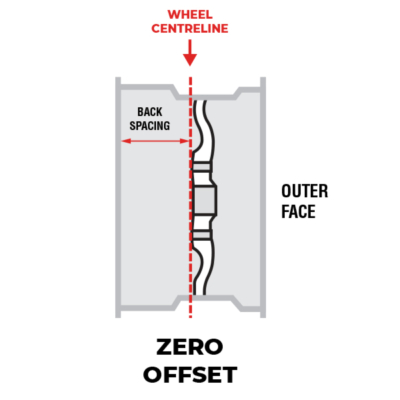
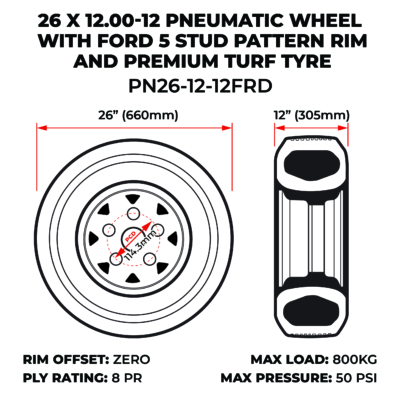
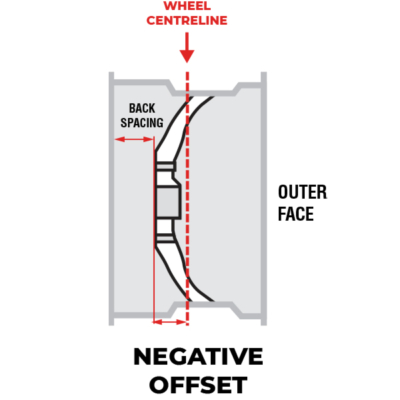
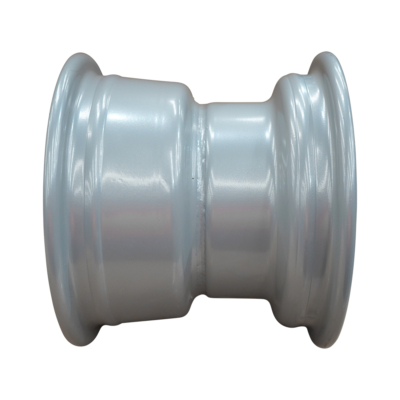
Rim offset is the position of the wheel mounting face relative to the centre of the rim. Zero offset centres the wheel over the hub, positive offset positions the wheel further inwards, and negative offset moves it further outwards. Selecting the correct offset is important for maintaining proper clearance, wheel alignment and equipment stability.
What is the difference between Mini 4-stud and Ford 5-stud wheel patterns?
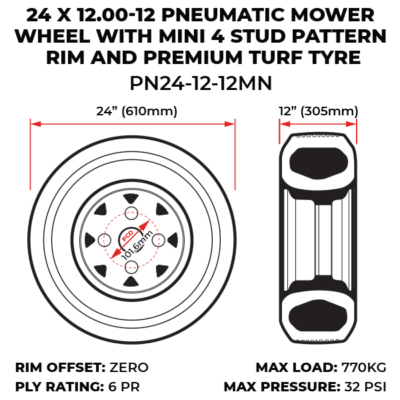
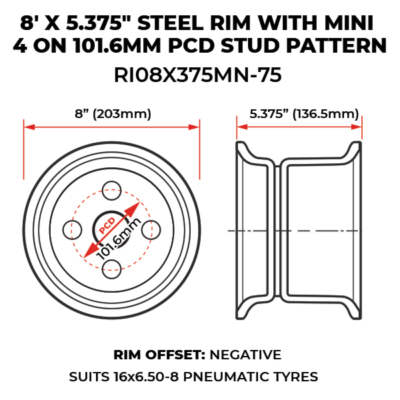
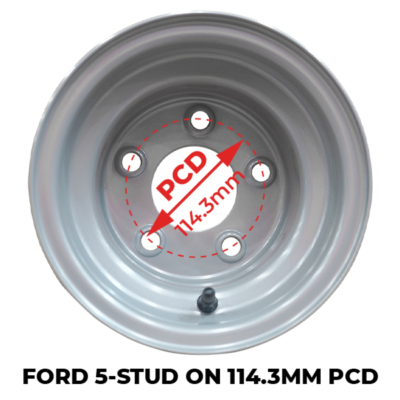
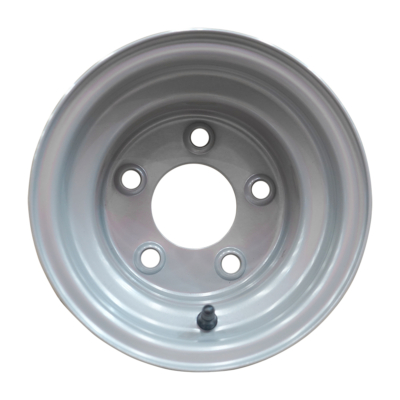
Mini 4-stud wheels use four mounting holes on a 101.6 mm (4″) PCD and are commonly fitted to compact mowers, golf carts, trailers and turf equipment. Ford 5-stud wheels feature five mounting holes on a 114.3 mm (4.5″) PCD, providing increased strength and load distribution for heavier-duty ride-on mowers, utility trailers and ground support equipment.
Can I buy replacement tyres, rims and tubes separately?
Yes. Richmond supplies complete pneumatic wheel assemblies as well as replacement turf tyres, tubes and steel rims. This allows you to replace individual components or complete wheel assemblies depending on the condition of your existing wheels and your maintenance requirements.
Will turf tyres damage grass?
Turf tyres are specifically designed to minimise ground disturbance while providing reliable traction on grass and landscaped surfaces. Their wide footprint and specialised tread pattern help distribute weight more evenly than aggressive agricultural tyres, reducing the risk of marking or tearing healthy turf under normal operating conditions.
What equipment are premium turf wheels compatible with?
Richmond’s premium turf wheels are suitable for a wide range of equipment, including ride-on lawn mowers, zero-turn mowers, golf carts, utility trailers, greenskeeping machinery and other turf maintenance equipment. Compatibility depends on matching the correct tyre size, rim dimensions, mounting pattern and bearing configuration.
Rim Offsets
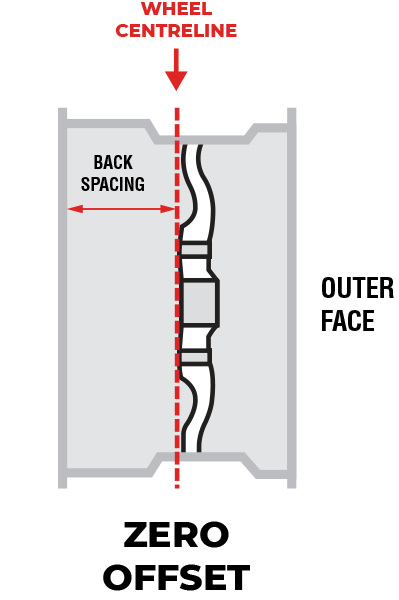 |
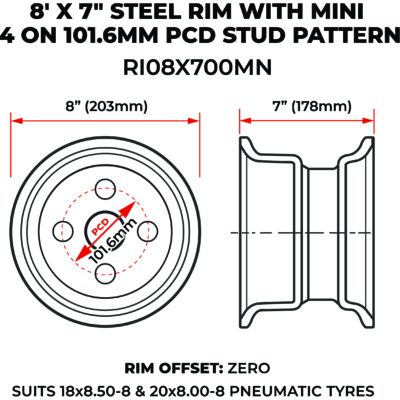
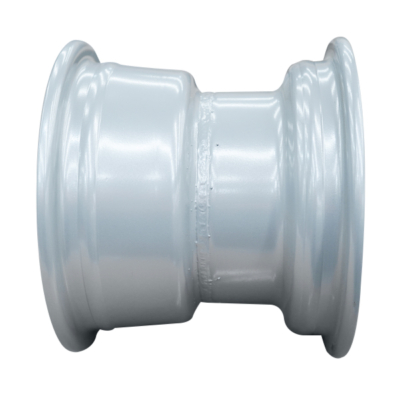
Zero Offset RimA zero offset wheel means that the mounting point of the hub is in the centreline of the rim. This means the wheel is mounted equally spaced and balanced between each side of the rim for maintaining a balanced load distribution across the hub. This type of offset is common in rear golf buggy wheels, trailers, and turf equipment. |
|
 |
Positive Offset RimA positive offset on a wheel means that the mounting position of the wheel is located closer to the outside face of the rim. This moves the wheel and tyre further inward under the frame of equipment when mounted. Providing a more compact mounting position. A negative offset means the mounting point is located closer to the inside (interior side) face of the wheel. |
|
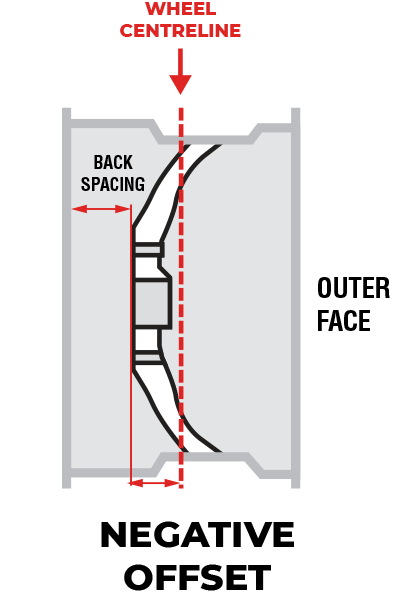 |
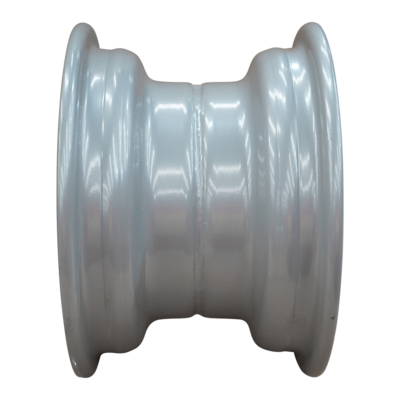
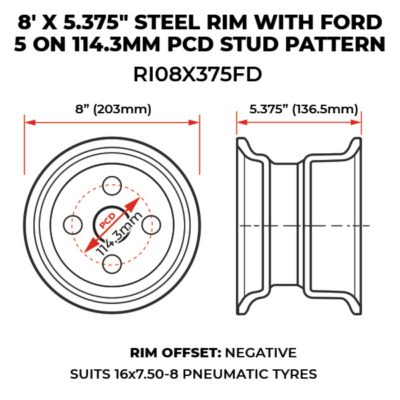
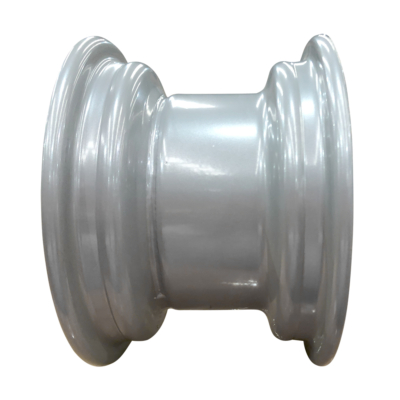
Negative Offset RimA Negative offset means that the mounting position of the wheel is located closer to the inner (chassis-side) face of the wheel. This moves the centre of the wheel and tyre further outward when mounted. Improving clearance between the wheel hub and other components. Commonly seen on a wide range of rear ride-on mower wheels. A positive offset on a wheel means the mounting point is located closer to the outside (exterior side) of the wheel. |
Common PCD and Mounting Patterns
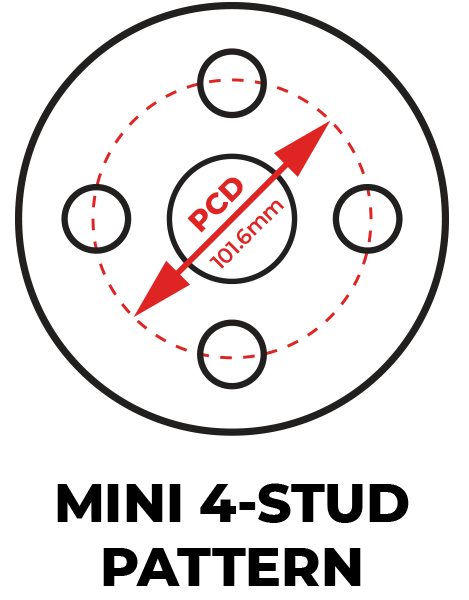 |
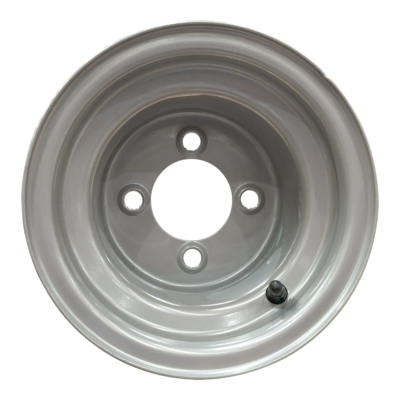
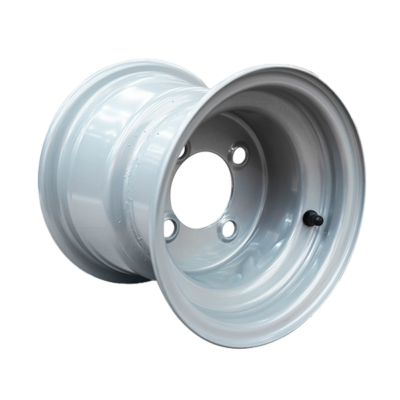
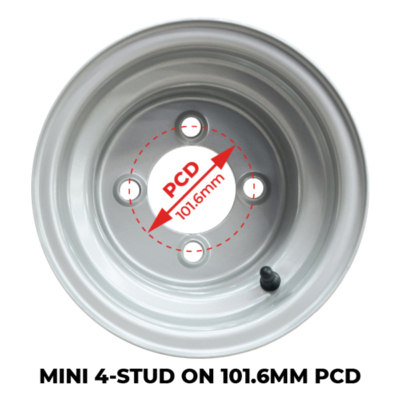
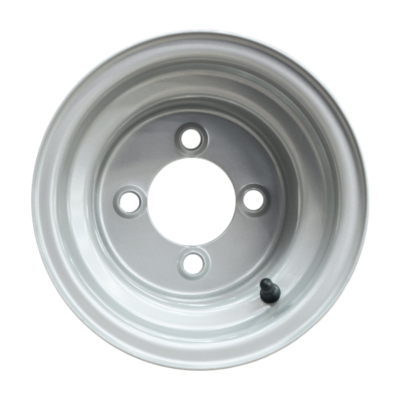
Mini 4-Stud Mounting PatternA Mini 4-stud mounting pattern offers a compact stud layout that suits lightweight hubs and wheels. The Mini mounting pattern features 4 bolt holes on a 101.6mm (4”) circle. It contains 4 studs evenly spaced around the rim of the wheel and provides easy installation and alignment. This mounting pattern is commonly found on small trailers, compact mowers, golf buggies, and turf equipment. |
|
 |
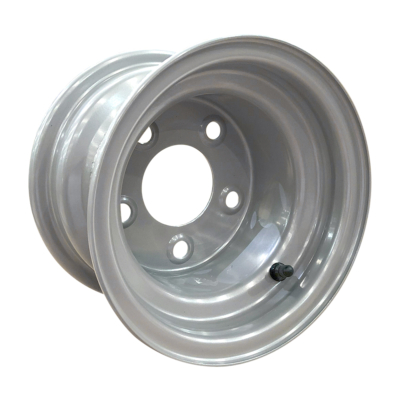
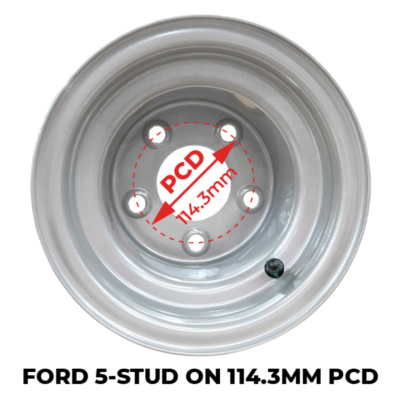
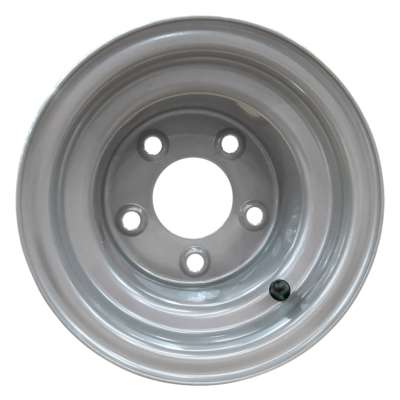
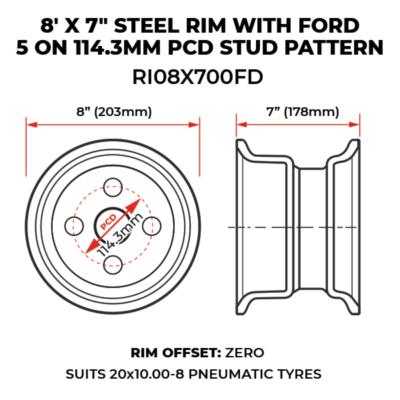
Ford 5-Stud Mounting PatternWidely used across a range of equipment a Ford 5-stud mounting pattern features 5 bolt holes on a 114.3mm (4.5”) circle. The additional mounting point offers improved strength and load distribution compared to 3 or 4-stud setups. This mounting pattern is commonly found on heavier duty mower wheels, utility and ground support equipment as well as agricultural & greens keeping equipment. |