



Frequently Asked Questions
What is a pallet jack and what is it used for?
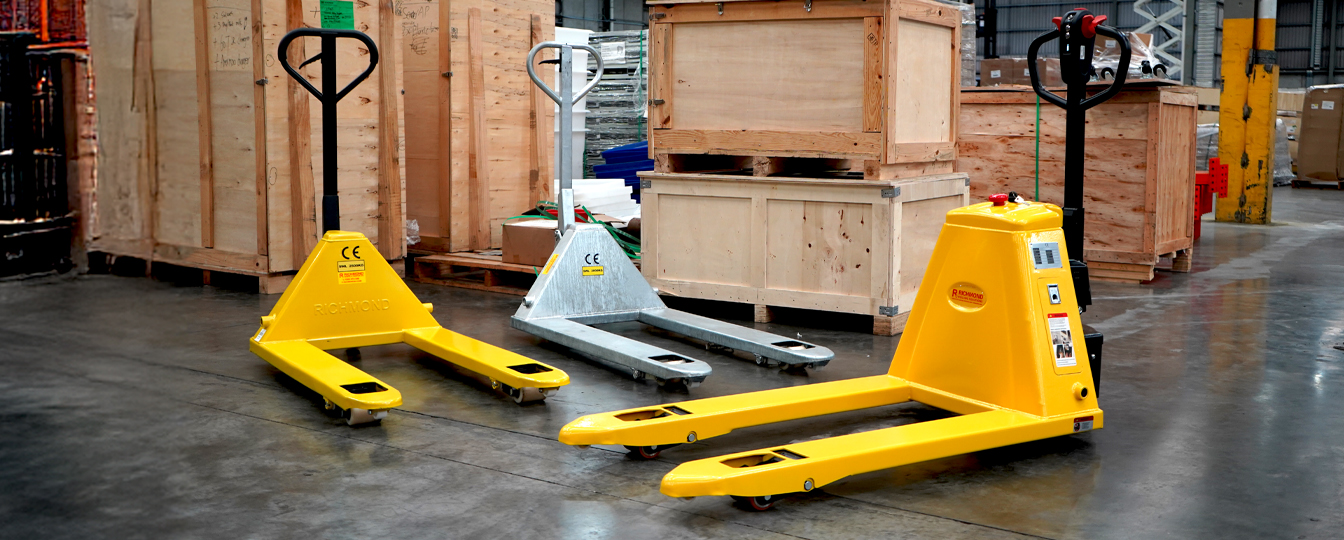
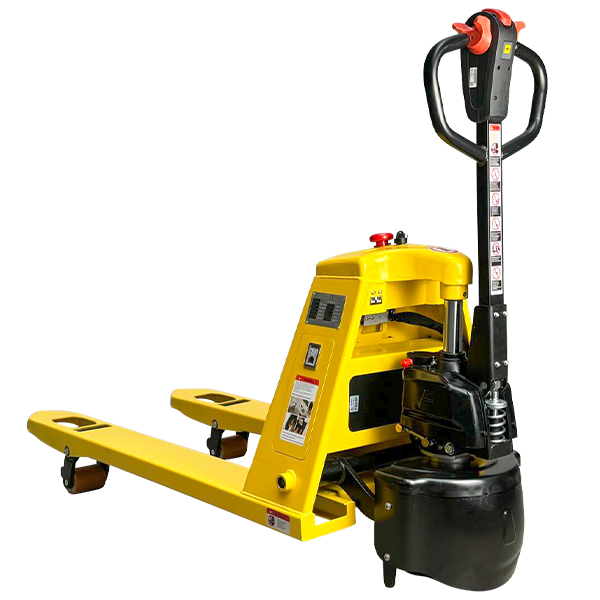
A pallet jack, also known as a pallet truck, is a material handling device used to lift pallets slightly off the ground and move them across suitable floor surfaces. Pallet jacks are commonly used in warehouses, factories, distribution centres, retail stockrooms and transport depots for moving palletised goods. Manual pallet jacks use a hydraulic pump operated by the handle, while electric pallet jacks use powered systems to assist with lifting and movement. Richmond supplies both types, along with specialised pallet jacks for different pallet sizes, load capacities and workplace conditions.
How do I choose the right pallet jack for my workplace?
Start by checking the maximum weight of the palletised loads you need to move, followed by the pallet dimensions, entry clearance and available working space. For general warehouse handling, a standard manual pallet jack is often suitable. Narrow and short-fork models are useful for smaller pallets or restricted areas, while low-profile pallet jacks suit pallets with limited ground clearance. If you move heavy pallets frequently or over longer distances, an electric pallet jack may reduce operator effort. Floor conditions, fork dimensions and wheel material should also be considered before selecting a model.
What is the difference between a manual and electric pallet jack?
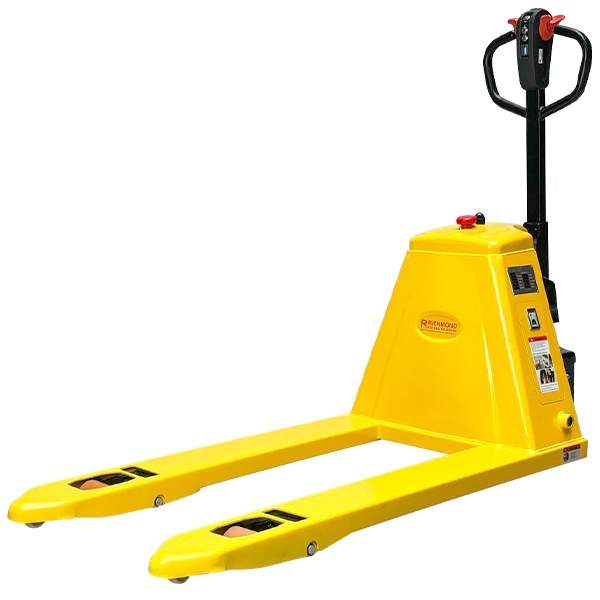
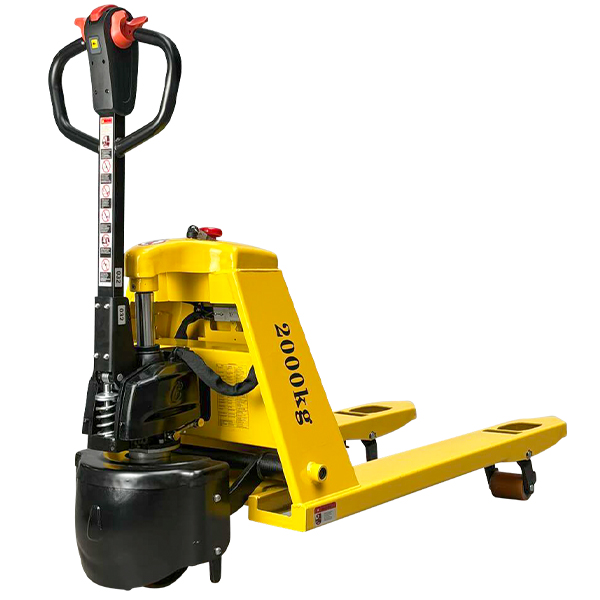
A manual pallet jack uses a hand-operated hydraulic pump to lift the pallet, with the operator providing the force needed to push or pull the load. An electric pallet jack uses a powered drive system and electric lifting to reduce the physical effort involved in transport. Manual pallet jacks are practical for general warehouse operations, shorter distances and occasional handling. Electric pallet jacks are useful in busy warehouses, logistics facilities and distribution centres where heavy loads need to be moved repeatedly. The right choice depends on load weight, travel distance, frequency of use and available budget.
How much weight can a pallet jack lift?
The lifting capacity of a pallet jack depends on the model and its intended application. Richmond’s standard heavy duty manual pallet jacks include models rated to 2,500kg, while the current electric lithium-ion range includes 1,500kg and 2,000kg capacity options. Specialised models may have different ratings, such as the 1,000kg High Lift Skid Lifter. Always check the Safe Working Load (SWL) of the individual pallet jack before use. The load must also be correctly positioned and supported by the forks, with the pallet itself suitable for the weight being transported.
What size pallet jack do I need for Australian pallets?
For standard Australian pallets, a pallet jack with fork dimensions designed for Australian pallet entry points is generally the best starting point. Richmond supplies standard pallet jacks with 1,150mm forks, including wider and narrower fork arrangements. However, not every pallet has the same entry clearance or underside construction. Before ordering, check the pallet’s fork entry width, ground clearance and dimensions against the individual pallet jack specifications. Richmond also offers short, narrow, low-profile and extended-fork models for non-standard pallet handling requirements.
What is the difference between a narrow and short pallet jack?
A narrow pallet jack has a reduced overall fork width, allowing it to fit pallets with narrower fork entry openings. A short pallet jack has shorter forks, making it suitable for smaller pallets, skids and certain confined handling areas. Richmond’s Short and Narrow Pallet Jack (PJR012) combines both features, with 800mm fork length and 540mm overall fork width. This makes it useful for handling small pallets and skids where a full-length pallet jack may be impractical. The correct model should be chosen based on pallet dimensions and load support, not aisle width alone.
What is a low-profile pallet jack used for?
A low-profile pallet jack is designed for pallets and skids with less ground clearance than standard pallet designs. Its lower minimum fork height allows the forks to enter beneath loads that may not accommodate a conventional pallet jack. Richmond supplies low-profile and low-profile narrow models for specialised warehouse, manufacturing and transport applications. The correct model depends on the pallet’s underside clearance, fork entry dimensions and safe working load. A low-profile pallet jack should only be used where the pallet and floor conditions are suitable.
What is a Quick-Lift pallet jack?
A Quick-Lift pallet jack uses a hydraulic mechanism that raises lighter loads with fewer handle pumps than a conventional pallet jack. This is useful in warehouses and distribution centres where operators frequently lift and move pallets. Richmond’s PJR020 Quick-Lift Pallet Jack has a 2,500kg safe working load, with the quick-lift function operating on lighter loads up to 180kg. Above that threshold, the jack operates using its normal lifting action. Quick-lift models are useful where repetitive pallet positioning makes lifting speed important.
What is the difference between a high-lift pallet jack and a standard pallet jack?
A standard pallet jack raises a pallet only high enough to clear the floor for horizontal transport. A high-lift pallet jack or skid lifter can raise compatible loads to a more convenient working height, reducing the need for repeated bending during packing, assembly and unloading. Richmond’s High Lift 1000kg Skid Lifter (HLR101) raises its forks to 800mm and is suitable for compatible open-bottom pallets and skids. It is not suitable for closed-bottom pallets with a bottom rail. High-lift models are primarily work-positioning equipment and should be selected according to pallet compatibility and lifting requirements.
Are stainless steel or galvanised pallet jacks better for wet environments?
Both stainless steel and galvanised pallet jacks offer greater corrosion resistance than standard powder-coated steel models, but they suit different operating requirements. Galvanised pallet jacks are a practical option for damp or moisture-prone industrial environments, while stainless steel pallet jacks are generally preferred for food processing and other hygiene-sensitive workplaces requiring frequent cleaning. The choice depends on moisture exposure, cleaning chemicals and site hygiene requirements. Always check the suitability of the complete pallet jack, including its wheels, bearings and hydraulic components, for the intended environment.
Are pallet jacks with built-in scales available?
Yes. Richmond supplies a 2000kg pallet jack with an integrated scale (PJR110) for weighing compatible palletised loads during handling. The built-in display allows operators to check load weight without transferring the pallet to a separate weighing platform. These pallet jacks are useful in freight handling, warehousing, stock control and despatch operations where weight information is required during material movement. For applications involving regulated trade measurements, check whether the weighing system meets the relevant accuracy and approval requirements.
Are nylon or polyurethane pallet jack wheels better?
Nylon and polyurethane are two common pallet jack wheel and roller materials. Nylon wheels are hard-wearing and roll efficiently on smooth, firm warehouse floors, but may create more noise and vibration. Polyurethane wheels provide a balance of wear resistance, quieter movement and floor protection, making them useful where smoother rolling and reduced floor marking are important. The correct material depends on load weight, floor condition and operating environment. Richmond offers replacement nylon and polyurethane wheels and rollers for compatible pallet jack models.
Can pallet jacks be used on uneven floors or ramps?
Most standard pallet jacks are intended for operation on firm, level surfaces suitable for their wheel and roller design. Uneven floors, debris, expansion joints and ramps can make heavy pallets harder to control and increase handling risks. Pallet jacks should not be used on slopes unless the particular model and workplace procedures permit it. Where loads must travel over difficult surfaces or gradients, a risk assessment and appropriately designed handling equipment may be required. Richmond can assist with assessing suitable options for the operating environment.
How do I maintain a pallet jack, and are spare parts available?
Regularly inspect pallet jack wheels, entry rollers, forks, axles, hydraulic components and moving parts for wear or damage. Check for hydraulic leaks, ensure the lifting and lowering functions operate correctly and keep wheels free from debris. Lubricate components where recommended by the manufacturer and avoid operating equipment that shows structural damage or lifting faults. Richmond supplies replacement parts and service support for compatible pallet jack models, including selected nylon and polyurethane wheels and rollers. For electric pallet jacks, battery care and electrical servicing must also follow the manufacturer’s instructions. Contact your local Richmond branch to confirm parts and service availability for your model.
Heavy Duty Pallet Jacks & Pallet Trucks for Australian Workplaces
Richmond supplies a comprehensive range of pallet jacks and pallet trucks for moving palletised goods throughout warehouses, manufacturing facilities, logistics centres, transport depots and commercial workplaces. Designed for everyday material handling, our heavy duty pallet jacks help operators lift and move heavy pallets without relying on manual carrying. The range covers standard warehouse pallet handling through to specialised applications involving restricted access, low-clearance pallets, oversized loads and frequent pallet transport.
Our range includes manual pallet jacks, electric pallet jacks, narrow and short-fork models, low-profile pallet trucks, quick-lift designs, high-lift skid lifters, stainless steel and galvanised pallet jacks, and models with integrated scales. Built with durable frames, reliable hydraulic systems and wheels selected for industrial use, Richmond pallet jacks are designed to handle demanding workplace conditions. Backed by over 65 years of rolling equipment experience, Australia-wide branches, spare parts and product support, Richmond helps businesses keep pallet handling equipment operating reliably.
Manual & Electric Pallet Jacks for Warehouse Handling
Choosing between a manual and electric pallet truck depends on the volume of pallets being moved, the weight of the loads and the distance they need to travel. Richmond offers both options to suit different workplace requirements.
Manual Pallet Jacks
Manual pallet jacks use a hydraulic pump operated by the handle to lift pallets and allow them to be moved manually. They are widely used in warehouses, workshops, retail stockrooms and logistics operations for short-distance pallet handling.
Richmond’s manual pallet truck range includes standard, narrow, low-profile, extra-long, quick-lift, galvanised and stainless steel options. Many standard manual models are rated to 2,500kg, providing suitable capacity for common warehouse handling tasks. The range includes different fork dimensions and wheel configurations to suit Australian pallets and specialised loads.
Electric Pallet Jacks & Powered Pallet Movers
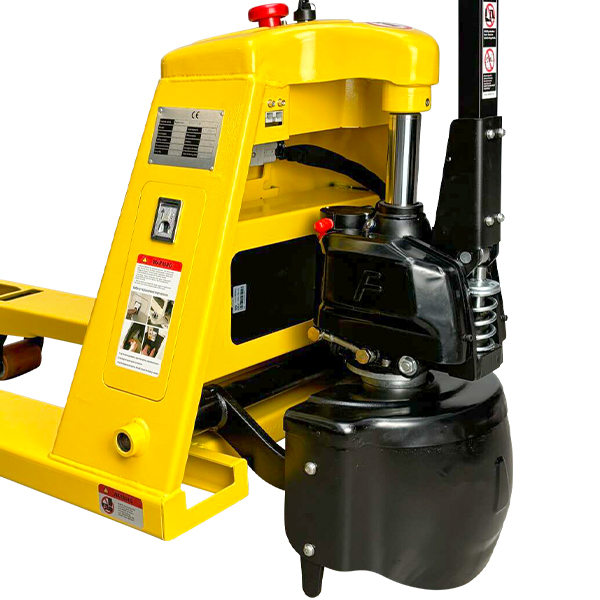
Electric pallet jacks use powered drive and lifting systems to assist with moving heavy pallets. They are particularly useful for warehouses, distribution centres and transport facilities where repeated pallet movement or longer travel distances make manual handling more demanding.
Richmond’s lithium-ion electric pallet jack range includes 1,500kg and 2,000kg capacity models, with rechargeable battery systems and compatible spare battery options. These powered pallet trucks help reduce the physical effort required to move heavy loads while maintaining controlled operation in suitable warehouse environments.
Pallet Jack Types by Application
Not every pallet is the same size or construction, and not every workplace has the same handling requirements. Richmond offers a range of specialised industrial pallet jacks designed for different pallet dimensions, floor clearances and operational tasks.
Standard Heavy Duty Pallet Jacks
Standard pallet jacks are designed for general warehouse transport and everyday pallet handling. Richmond’s Standard 2500kg Powder Coated Pallet Jack (PJR001Y) is a popular manual model designed for moving standard Australian pallets.
These pallet trucks feature heavy duty steel construction, hydraulic lifting and industrial wheels and rollers to support repetitive warehouse use. They are commonly used for unloading deliveries, repositioning palletised goods and transporting stock between storage and despatch areas.
View Standard 2500kg Pallet Jack
Narrow Pallet Jacks
Narrow pallet jacks use a reduced overall fork width to accommodate pallets with narrower entry openings. Richmond’s Narrow 2500kg Powder Coated Pallet Jack (PJR002Y) is designed for specialised pallet handling and applications where a standard-width fork arrangement is unsuitable.
These pallet trucks are useful in warehouses, freight operations and commercial storage environments handling non-standard pallets. Operators should check both the fork width and available turning space when selecting equipment for restricted areas.
Short & Narrow Pallet Jacks
Short and narrow pallet jacks are designed for smaller pallets, skids and applications where full-length forks would be impractical. Richmond’s Short and Narrow 2500kg Powder Coated Pallet Jack (PJR012) has shorter 800mm forks and a 540mm overall fork width.
This compact configuration is useful for handling small palletised loads in workshops, retail stockrooms, transport facilities and other confined environments. The shorter fork design should be matched to the size and support requirements of the pallet.
Browse Short & Narrow Pallet Jack
Low-Profile Pallet Jacks
Low-profile pallet jacks are designed for moving pallets and skids with reduced clearance underneath. Their lower minimum fork height allows them to enter beneath loads that may not accommodate a standard pallet truck.
Richmond supplies low-profile pallet jacks including the 2000kg Powder Coated Pallet Jack (PJR005) and a Low Profile 4-Way Narrow model (PJR010). These are useful for specialised manufacturing, freight handling and storage applications involving non-standard pallets or skids.
Explore Low-Profile Pallet Jacks
Extra-Long & Extended Fork Pallet Jacks
Extra-long pallet jacks are designed for oversized loads requiring longer fork support than a standard pallet jack can provide. Richmond offers extended-fork models including the Extra Long 1800mm Pallet Jack (PJR013) and Double Length 2400mm Pallet Jack (PJR014).
These pallet trucks are useful for transporting compatible long pallets and specialised industrial loads in warehouses, manufacturing facilities and freight operations. Longer forks affect turning clearance, load distribution and capacity, so the correct model should be selected based on the load dimensions and working environment.
Quick-Lift Pallet Jacks
Quick-lift pallet jacks are designed to raise lighter palletised loads with fewer pumping actions. Richmond’s Quick-Lift 2500kg Powder Coated Pallet Jack (PJR020) offers a quick-lift function for loads up to 180kg while retaining a 2,500kg overall safe working load.
This makes quick-lift pallet trucks useful for repetitive pallet handling where light loads are frequently lifted, moved and lowered. They are commonly used in warehouses, logistics centres and distribution operations.
View Quick-Lift 2500kg Pallet Jack
High-Lift Pallet Jacks & Skid Lifters
High-lift pallet jacks provide additional lifting height to position compatible loads at a more convenient working level. Richmond supplies high-lift skid lifters, including the High Lift 1000kg Powder Coated Skid Lifter (HLR101), with a scissor lifting mechanism that raises the forks to 800mm.
These lifting units are useful in packing areas, assembly operations and manufacturing facilities where operators repeatedly load or unload compatible open-bottom pallets and skids. They are primarily designed for work positioning rather than elevated pallet stacking.
Specialised Pallet Jack Options
Stainless Steel Pallet Jacks
Stainless steel pallet jacks provide increased corrosion resistance for environments where hygiene, regular cleaning and moisture exposure are important. Richmond offers standard and narrow stainless steel pallet jacks, including models with 2,000kg lifting capacity.
These pallet trucks are commonly used in food processing facilities, commercial kitchens, pharmaceutical operations and other hygiene-sensitive workplaces. Stainless steel construction helps equipment withstand suitable cleaning procedures while supporting routine pallet movement.
Galvanised Pallet Jacks
Galvanised pallet jacks offer a corrosion-resistant alternative to standard powder-coated models. Richmond supplies standard and narrow galvanised pallet trucks for applications where equipment may be exposed to moisture, damp storage conditions and general industrial handling.
These models are useful in agricultural facilities, food production, transport operations and moisture-prone industrial workplaces. Galvanised construction helps protect the steel frame, although all components should be checked for suitability where frequent washing or corrosive chemicals are involved.
Powder-Coated Pallet Jacks
Powder-coated pallet jacks are suitable for everyday warehouse and commercial handling where corrosion exposure is relatively low. Richmond’s range includes standard, narrow, short-fork, low-profile and extended-fork powder-coated models.
The powder-coated finish provides a protective surface over the steel frame, while hydraulic lifting systems and industrial wheels support routine pallet movement. These models are commonly used in warehouses, factories, workshops and distribution centres.
Pallet Jacks with Integrated Scales
Pallet jacks with scales combine manual pallet movement with built-in weighing equipment. Richmond’s Standard 2000kg Powder Coated Pallet Jack with Scale (PJR110) allows operators to weigh compatible palletised loads using an integrated digital display.
These weighing pallet trucks are useful for warehouse receiving, freight preparation, stock management and despatch operations where load weights need to be checked during handling. Combining transport and weighing functions can reduce the need to move goods between separate pieces of equipment.
How to Choose the Right Pallet Jack
Choosing the right pallet jack or pallet truck involves more than checking the lifting capacity. The pallet dimensions, floor conditions, travel distance and frequency of use all influence which model will perform best.
Before selecting a pallet jack, consider the following:
- Safe Working Load: Check the maximum pallet weight against the pallet jack’s rated capacity. Standard models may be rated to 2,500kg, while specialised and electric models have different capacities.
- Fork length and width: Measure the pallet entry dimensions and support requirements. Richmond offers standard, narrow, short and extended-fork configurations.
- Minimum fork height: Check the clearance beneath the pallet. Low-profile models may be required for skids and non-standard pallet designs.
- Manual or electric operation: Consider the weight of the load, travel distance and how frequently pallets are moved throughout the day.
- Wheel and roller material: Nylon and polyurethane wheels provide different rolling characteristics depending on floor conditions and load requirements.
- Workplace environment: Consider galvanised or stainless steel models for moisture-prone and hygiene-sensitive applications where appropriate.
- Lifting height: A standard pallet jack is designed for low-level transport, while high-lift skid lifters provide additional working height for compatible loads.
- Available space: Check aisle width, turning clearance, doorways and loading areas, particularly when selecting an extra-long pallet jack.
- Maintenance and spare parts: Consider wheel replacement, hydraulic servicing, battery support and access to compatible spare parts.
Matching the equipment to the pallet and operating environment helps maintain efficient handling, reduce unnecessary operator effort and minimise equipment damage.
Key Features of Richmond Pallet Jacks
Heavy Duty Steel Construction
Richmond’s industrial pallet jacks are built with reinforced steel frames designed to support repeated pallet handling in warehouses, manufacturing facilities and distribution operations. Different frame sizes and fork configurations suit different load types and working environments.
Reliable Hydraulic Lifting
Manual pallet jacks use hydraulic lifting systems to raise and lower palletised loads in a controlled manner. Selected Richmond models include sealed hydraulic pumps and ergonomic lifting handles to support reliable everyday operation.
Multiple Load Capacities & Fork Configurations
The range includes standard 2,500kg manual pallet trucks, specialised models with different rated capacities and electric pallet jacks rated to 1,500kg and 2,000kg. Narrow, short, low-profile and extended-fork options allow equipment to be matched to different pallet dimensions.
Nylon & Polyurethane Wheel Options
Richmond supplies pallet jacks with industrial nylon and polyurethane wheels and rollers, with selected replacement options available. Choosing the correct wheel material helps manage rolling performance, wear and floor protection in different working environments.
Electric & Lithium-Ion Options
Richmond’s electric pallet jacks use rechargeable lithium-ion battery systems to support powered lifting and transport. Compatible removable batteries and spare battery options help businesses manage charging and equipment availability during regular operation.
Local Spare Parts & Product Support
Richmond provides local product advice, spare parts and servicing support for pallet handling equipment. Compatible replacement wheels, rollers and other components are available for selected models, helping businesses maintain equipment and reduce avoidable downtime.
Pallet Jack Applications by Industry
- Warehousing & Logistics: Manual and electric pallet jacks for loading, unloading, stock transport, pallet positioning and movement between receiving and despatch areas.
- Manufacturing & Production: Heavy duty pallet trucks for moving raw materials, components, production supplies and finished goods.
- Retail & Distribution: Compact manual pallet jacks for handling deliveries, stock replenishment and back-of-house goods movement.
- Freight & Transport: Standard and extended-fork pallet jacks for moving compatible palletised freight through depots and loading facilities.
- Food Processing & Agriculture: Stainless steel and galvanised pallet jacks for transporting goods in environments where hygiene and corrosion resistance are important.
- Workshops & Maintenance: Pallet jacks and high-lift skid lifters for moving compatible heavy equipment, supplies and palletised components.
- Government & Defence: Industrial pallet handling equipment for stores, maintenance facilities, logistics operations and controlled workplace environments.
Pallet Jack Spare Parts, Wheels & Maintenance
Regular maintenance is important for keeping pallet jacks operating safely and reducing downtime. Wheels and rollers are common wear components, particularly on equipment used frequently or operated across rough industrial floors. Richmond supplies compatible replacement pallet jack wheels and rollers, including nylon and polyurethane options, along with spare parts support for selected models.
Routine inspections should cover fork condition, wheel wear, entry rollers, hydraulic operation, axles, handle mechanisms and any signs of fluid leakage or structural damage. Electric pallet jacks also require battery care, charging and electrical maintenance in accordance with the manufacturer’s instructions. Equipment with lifting faults or damaged components should be removed from service until inspected and repaired.
Richmond’s Australia-wide branch network can assist with identifying replacement parts, product documentation and servicing options for compatible pallet jack models.
Complete Pallet Handling & Warehouse Equipment Solutions
Pallet jacks are often used alongside other material handling equipment to support complete warehouse and industrial workflows. Richmond also supplies complementary equipment for lifting, positioning, transporting and organising goods.
- Fork Stackers: For lifting and positioning compatible palletised loads at greater heights.
- Scissor Lift Tables: For adjusting load height during packing, assembly and production tasks.
- Pallet Lifters & Turntables: For improving access to palletised goods during loading and unloading.
- Platform Trolleys: For transporting cartons, equipment and materials that are not carried on pallets.
- Roll Cage Trolleys: For transporting loose goods, cartons and stock through warehousing and distribution operations.
- Hand Trolleys: For moving individual cartons, appliances and compatible goods around the workplace.
Explore Richmond’s complete Material Handling Equipment range for other industrial lifting and transport solutions.
Pallet Jacks for Sale Across Australia
Richmond supplies pallet jacks and pallet trucks for sale across Australia, supporting warehouses, manufacturing facilities, freight operators, retailers and industrial businesses. Our range includes standard manual pallet trucks, narrow and low-profile pallet jacks, extra-long models, high-lift skid lifters, stainless steel and galvanised equipment, and lithium-ion electric pallet jacks.
With over 65 years of experience supplying wheels and material handling solutions, Richmond provides Australia-wide product support, spare parts availability and assistance with equipment selection. Whether you need a standard 2,500kg pallet jack for warehouse stock movement, an electric model for frequent transport tasks or a specialised pallet truck for unusual load dimensions, our team can help you identify a suitable solution.